Part of our mission is to promote the health and safety of the campus community. Here, we offer some information about common sources of illness and injury on college campuses - and how to mitigate risks.
-
Wake Forest University has a Proactive Medical Support policy that encourages students to seek care for themselves and friends in emergencies involving the use of alcohol and/or other drugs. We encourage you to familiarize yourself with the policy. You can read it here.
In an emergency involving alcohol or drugs, the priority must be adequate and timely medical care. If you or a friend require emergency care, call 911 immediately.
Remember, if someone is potentially in danger it is critical that you don’t wait. DON’T WAIT, SAVE A LIFE, MAKE THE CALL.
Find more information on how to recognize and help someone with alcohol poisoning. -
On campus, it's hard to avoid the viruses that cause colds and the flu. However, you can do a lot to protect yourself.
The best strategy for staying healthy is to wash your hands often, especially before meals. Also, think twice before you touch your face, as viruses can gain easy access through your nose and mouth. Carry some alcohol-based hand sanitizer with you for convenience.
In addition, remember that nutritious food, regular exercise, and adequate sleep are all imperative to a healthy immune system.
For more about seasonal cold and flu prevention strategies and symptoms, visit WebMD.
-
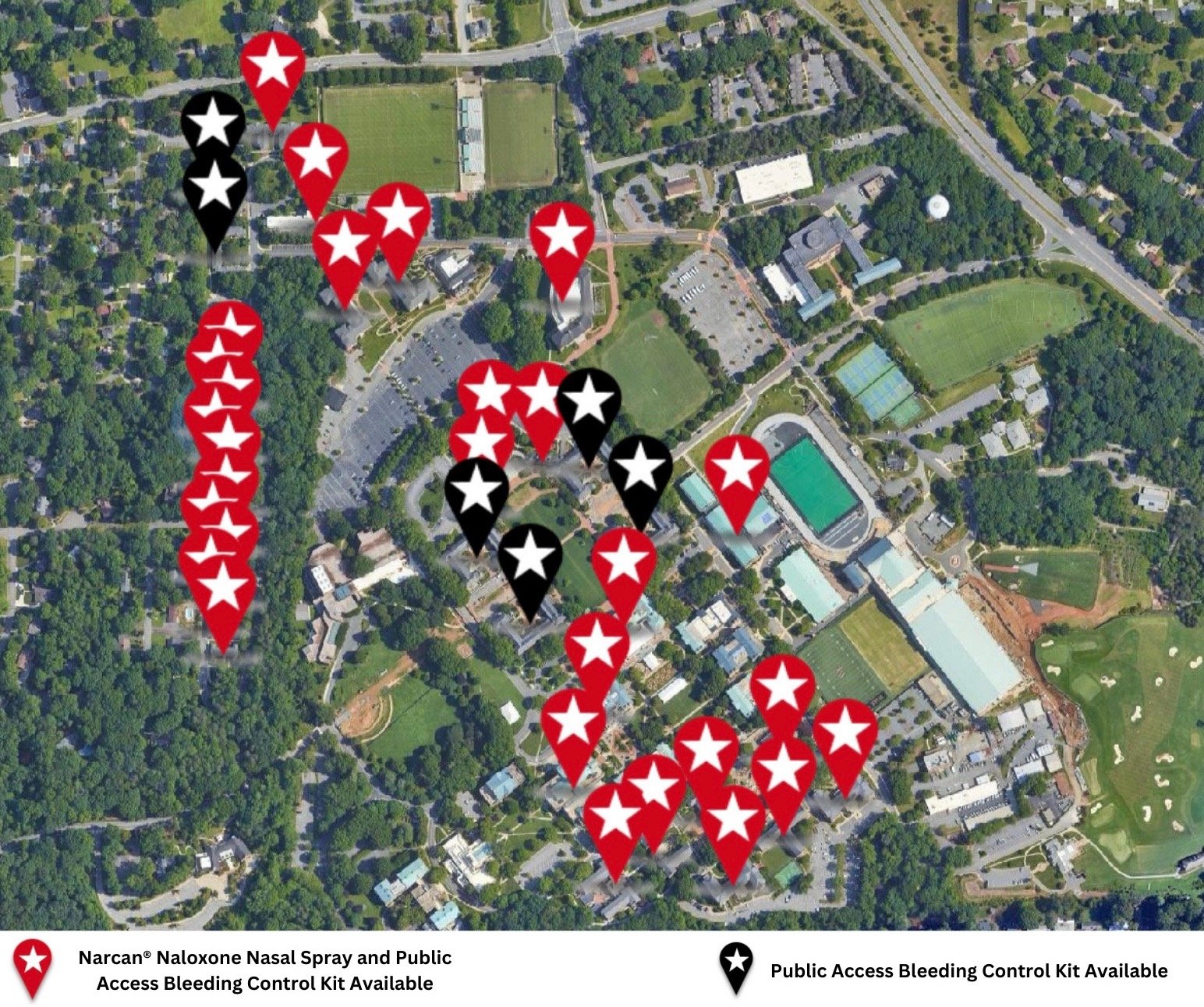
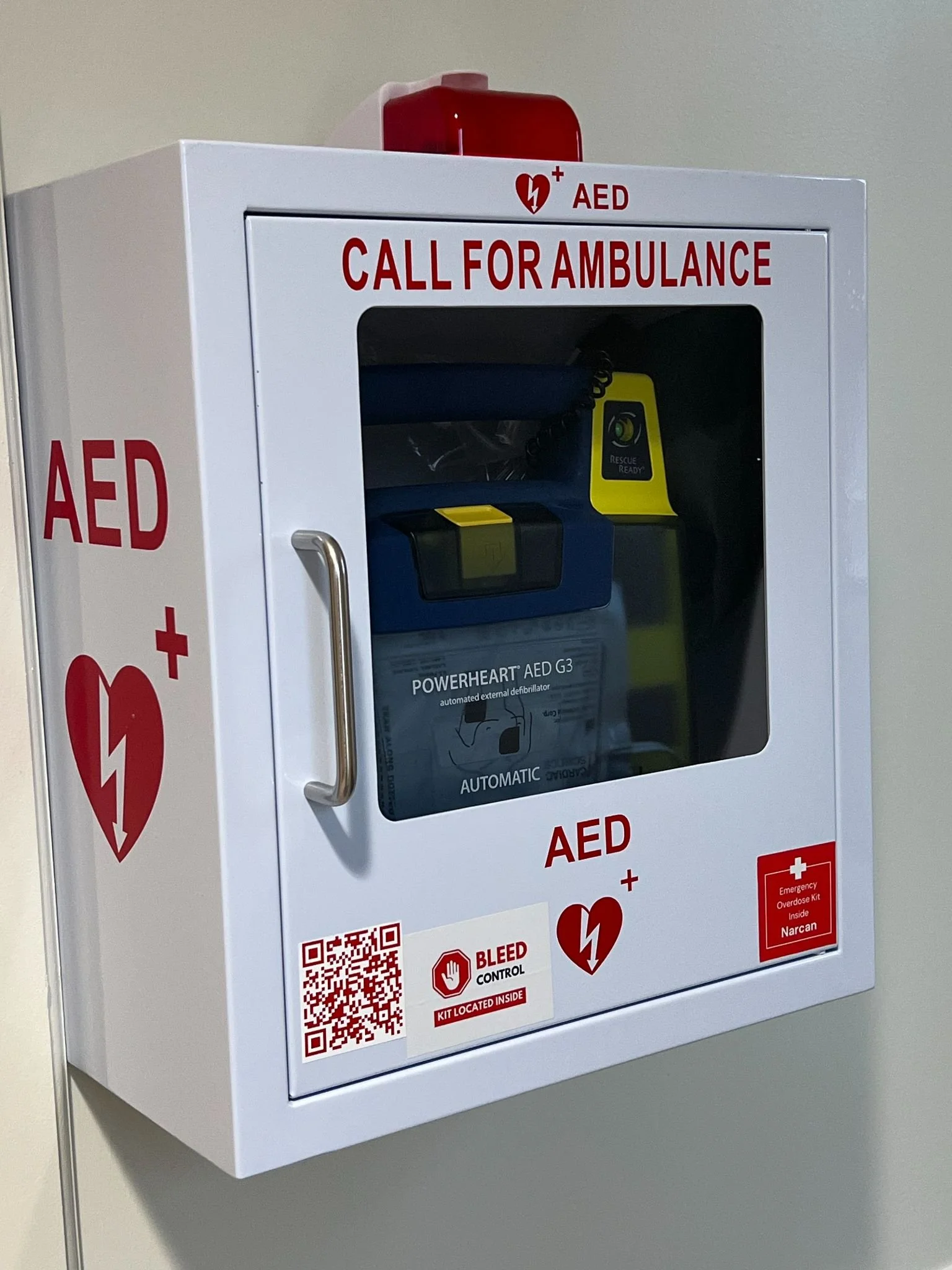
WFEMS has been able to ensure that most buildings on the Reynolda Campus are equipped with intranasal naloxone stored inside AED cabinets. These AEDs are clearly marked with stickers indicating the presence of naloxone.
Naloxone, commonly known by the brand name Narcan, is a life-saving medication that is administered to reverse the effects of opioid overdoses. Common signs of opioid overdoses include slowed or completely stopped breathing or heart rate, pale and clammy appearance, blue fingernails and lips, pinpoint pupils, and unresponsiveness with an inability to be woken up. In the event of an opioid overdose, naloxone can be given to reverse these life-threatening symptoms. After naloxone administration, call 911 immediately.
For more information on preventing, recognizing, and treating opioid overdoses, click here.
-
WFEMS has been able to ensure that all buildings on the Reynolda Campus are equipped with bleeding control kits, indicated by an external stop the bleed sticker.
Bleeding control kits contain tourniquets, rolled gauze, and gauze pads. These supplies are designed to help bystanders provide immediate, life-saving care in the event of a severe bleeding emergency before professional help arrives.
Life-threatening bleeding should be treated in the shortest amount of time possible to ensure patient survival. With bleeding control kits in campus buildings, we hope to streamline the bleeding control process and stop life-threatening injuries.
For more information on recognizing and treating life-threatening bleeding or to get trained in Stop the Bleed, click here